
Ethereum at Scale: Can Rollups Solve the Scalability Trilemma without compromises?
In this one, I write about Ethereum, It's problems and how some rollups are helping Ethereum maintain its decentralisation while achieving scalability

Ok, it’s time i write some stuff here. Starting with the OG (after btc), lord of chains,
ETHEREUM.
will cover about eth, problems, scaling, rollups and some stuff that i have been researching lately. let’s start.
Ethereum is the World Computer, a single, globally shared computing platform that exists between a network of 1,000s of computers (nodes). These nodes are real computers in the real world, communicating directly from peer to peer. Eth is home to world’s first ever and largest decentralised ecosystems that exist (DeFi, DePin, AMMs, etc…), so when you Transfer USDT on ethereum, some piece of code is executed on EVM (Ethereum Virtual Machine) . Ethereum uses the Merkle Patricia Trie (MPT) to store and update account states.
read the whitepaper if you haven’t already
Ethereum has it’s fair share of problems currently, mainly
Slow 🐌 : Ethereum can only process ~15 transactions per second (TPS) due to its EVM's single-threaded execution, block gas limits and block size which collectively prioritise decentralisation and security over raw speed.
High gas fees ⛽️ : High gas fees, as we all know some or most of the time txn fees are as high as 8-12$ , to just send USDT or any token, and fees increases as the complexity of the transaction we are interacting with increases
Data availability limits ⚠️ : Ethereum has certain limitations when it comes to data availability, with a data bandwidth of only 83 kilobytes per second
Costly to run a node 💰 : It’s quite expensive and costly to run an Eth node, why? we discuss this further in this post, also why should you care of running a node? well read this.
But also, as I write, Ethereum is the most decentralised blockchain network after Bitcoin and continues to improve, one of the major and most important one of which was the Merge, ethereum's transition from Proof of Work(PoW) to a Proof of Stake (PoS) consensus. PoS reduces Ethereum's energy consumption by ~99.96%, making the blockchain more sustainable as ethereum moves towards mass decentralisation.
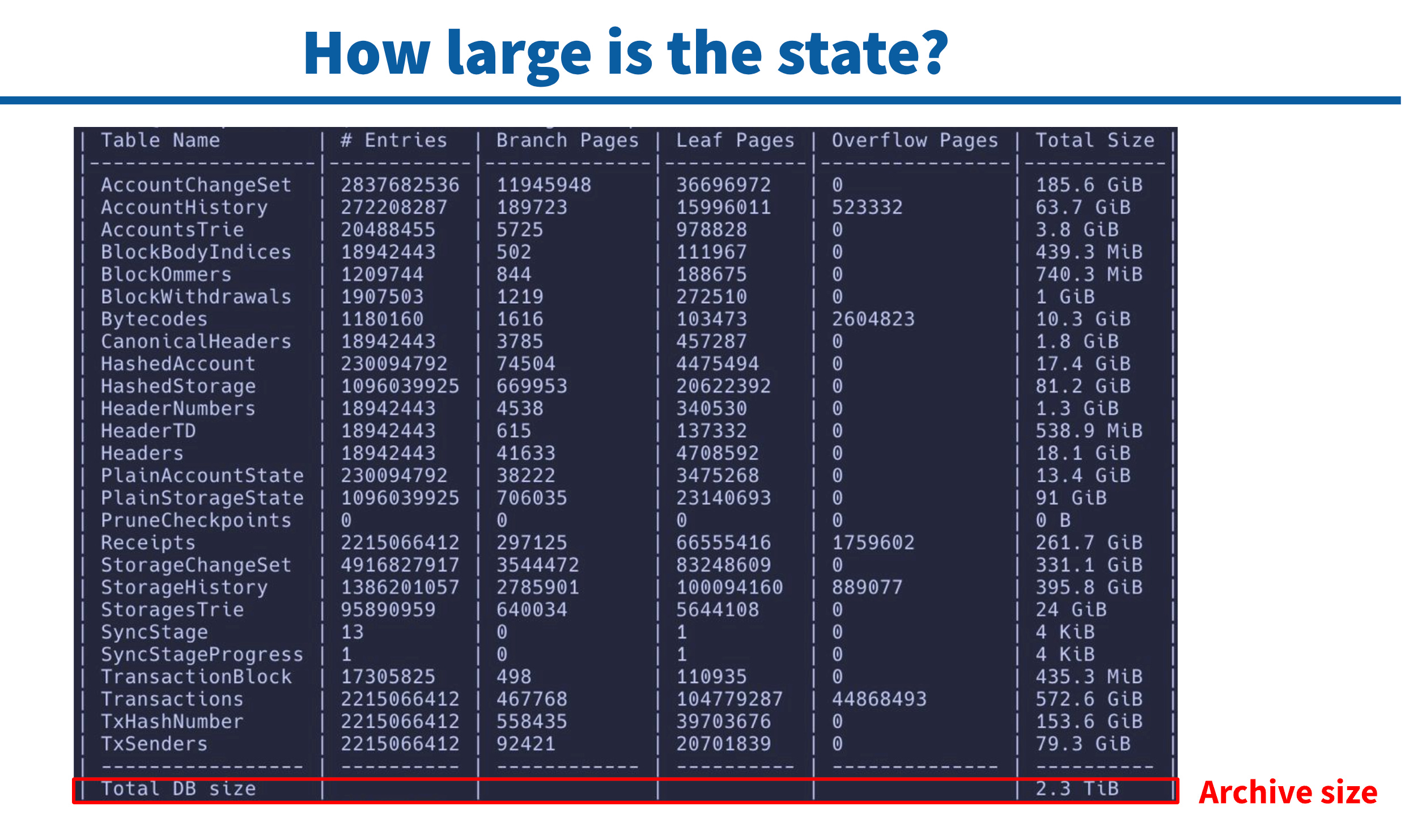
I have attached an image below, the number 2.3 TiB is what the state size of the state (blockchain) is currently (maybe more), point is it will keep on growing as more blocks are added to the chain, resulting in State bloat.
State bloat is the result of adding more data to the blockchain database itself (more here). You could imagine if the next 1 billion users flowed in to Web3 what impact this would have on the size of the chain database. that’s just one of the few reasoning of why running a full ethereum node is costly and why it’s slow.
Solutions That Emerged - Rollups
I assume you have an idea of what a rollup is, if not let me brief it here in few words. A rollup is a scaling solution that operates off-chain from the main L1 (in most cases, Ethereum). This solution performs transactions off-chain, which means it doesn’t have to compete for precious block space. After executing the transactions, it will send a batch of transaction data or proof of execution to the L1, where it will be settled

if you haven’t read this post of vitalik, i would highly suggest for you to go through it and then come back to this one.
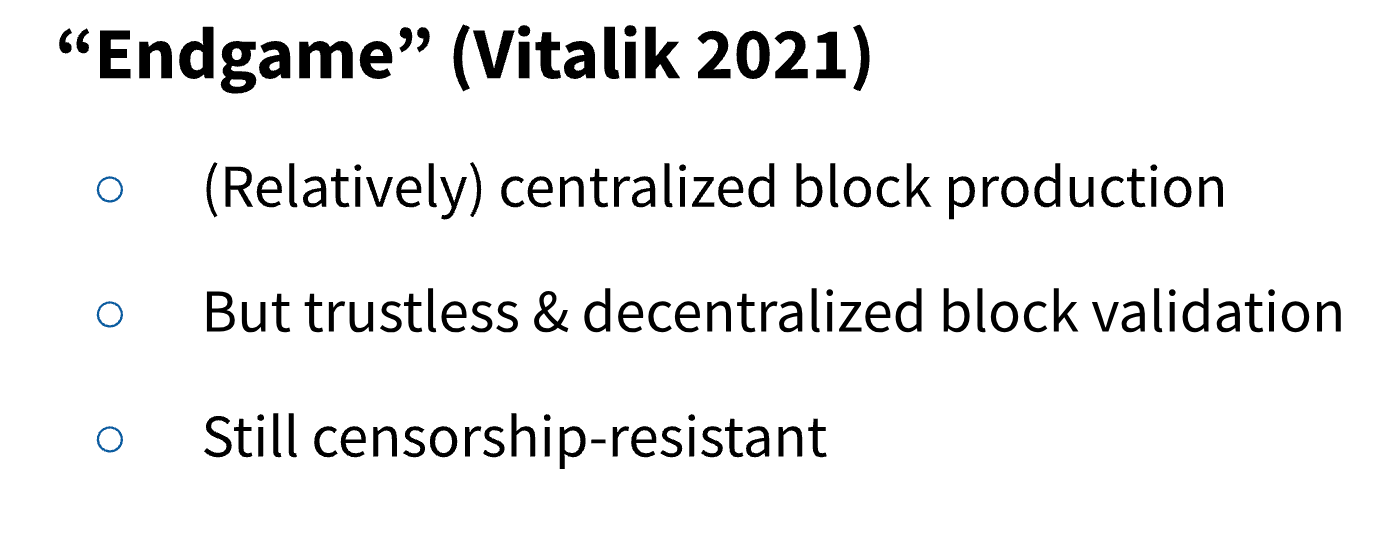
So, as per the post - most solutions (L1/L2’s) sacrifice decentralisation for performance, or security for speed, resulting in trade-offs that undermine the core principles of blockchain technology. This critical need for a scalable, trustless, and performant system—one that doesn’t trade off on the core principles of blockchain—remains unmet.
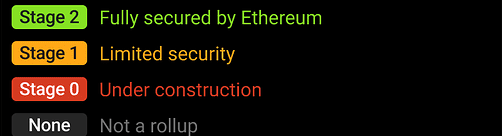
Also, there has emerged a framework to evaluate rollups maturity. this categories rollups into 3 Stages, STAGE0 - STAGE1 - STAGE2
Emerging solutions that are working on this are
Fuel Network (was first optimistic rollup on ethereum to reach STAGE2 )
MegaEth (a parallel EVM L2 backed by Vitalik Buterin)
Fuel Network - A different approach to Execution
What is fuel ? → Fuel is an execution layer for Ethereum, that offers unparalleled speed, flexibility, and scalability for both developers and users. But what exactly sets Fuel apart from other solutions?
FuelVM: let’s admit, EVM has problems, mainly it’s slow. The execution in EVM is stack based (if you know how opcodes are executed in evm, you will know why it’s slow), which means transactions are executed serially. FuelVM solves most of these problems nicely with their execution layer. how?
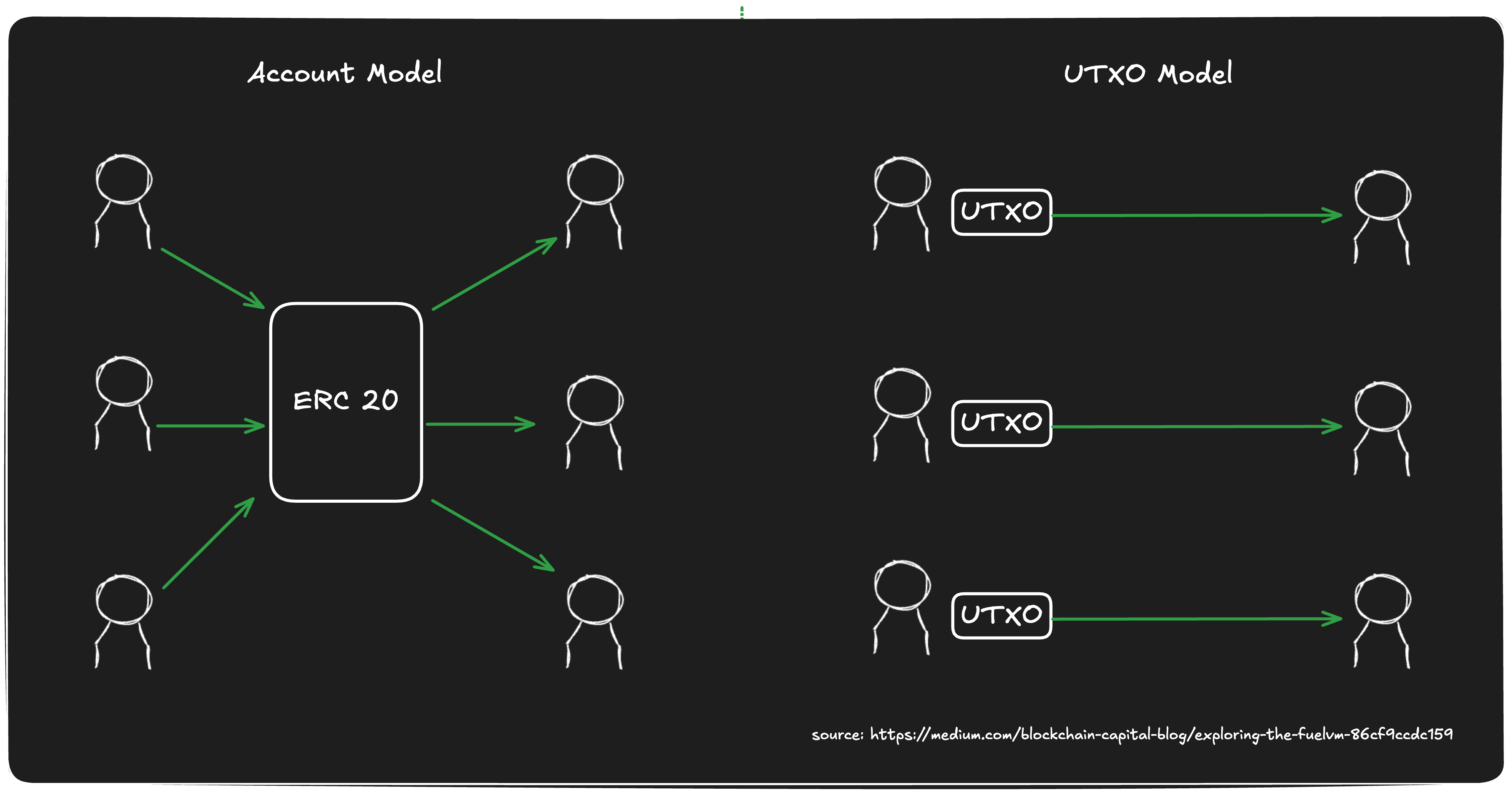
FuelVM utilizes the UTXO model for transactions, a method famously employed in the Bitcoin protocol. This method allows for advantages like parallel transaction execution. In this model, addresses can own native assets and spend these coins through transactions (see img)
Transactions modeled through UTXOs handle everything from token transfers to smart contract calls. Addresses on Fuel own unspent coins, allowing them to spend and perform transactions through the FuelVM.
The FuelVM operates as a register-based virtual machine, unlike the EVM and many others, which use a stack-based architecture. Register-based VM consistently outperform stack-based VM.
you can read more about Fuel and how it works from the Fuel Book and read more on fuel at their Fuel blogs substack.
MegaEth : Making Real-Time Blockchain A Reality
Well, what are they doing ? trying to solve the same problems of Ethereum → scale and speed.
MegaETH is branded as "real-time Ethereum" due to its capability to process transactions with sub-millisecond latency and achieve over 100,000 transactions per second (TPS). This performance is comparable to traditional web applications, aiming to bridge the gap between blockchain and cloud computing.
MegaETH divides the responsibilities of nodes into three types:
Sequencers: These nodes are responsible for ordering and executing transactions. Only one sequencer is active at a time to streamline the process.
Full Nodes: They receive transactions from the sequencer and apply them without re-executing, relying on proofs from provers for validation.
Provers: These nodes verify the blocks independently, enabling them to operate out of order and reducing the overall workload on the network.
You can read the whitepaper here ,
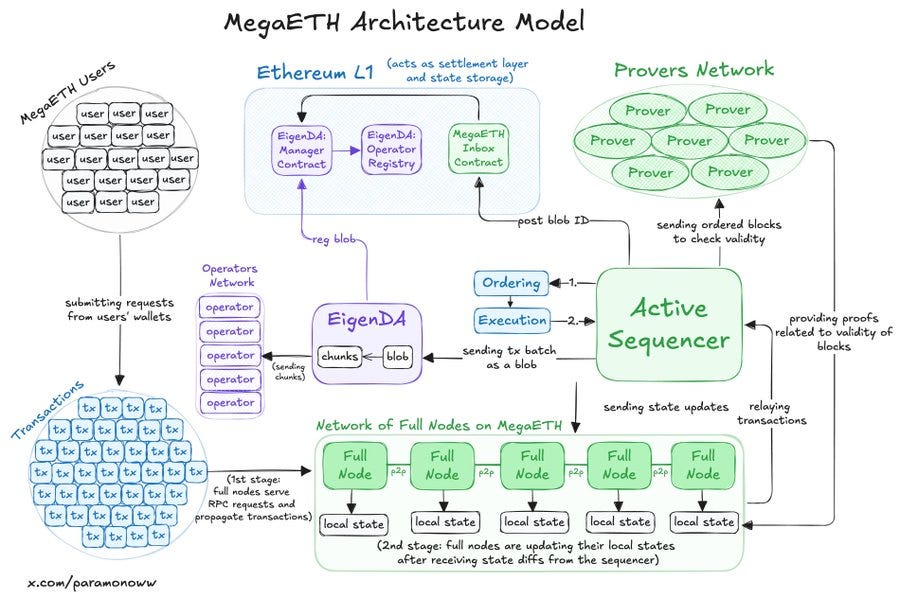
Pulling up a diagram that shows the working of MegaEth, credits to Pavel Paramonov
The system has 4 main parts working together:
> User transactions, MegaETH users submit transactions through their wallets and these transactions get collected into a pool
> The Processing Pipeline (Middle Section) Operators collect and process transactions in chunks EigenDA (a data availability system) helps manage and distribute these transaction chunks so Eeverything gets recorded on Ethereum L1, which acts like the main record keeper
> The Sequencer and Verification (Right Side) : The "Active Sequencer" is like a traffic controller, as it orders transactions and puts everything in sequence
> A network of "Provers" checks that all transactions are valid , this helps maintain security and correctness in the network.
> The Full Node Network (Bottom) : A network of full nodes maintains copies of the system's state, they process transactions and update their local records. They work in two stages, first handling incoming transactions then updating their records based on confirmed changes.
So the flow of transaction using MegaEth is like
Users send transactions from wallets to the system.
Operators bundle transactions into chunks (blobs) stored on Ethereum
Sequencer processes and orders these chunks
Provers validate accuracy to ensure correctness
Full nodes sync data to keep the system running.
So by decoupling consensus from execution, MegaETH is able to deliver 100k TPS, fees under $0.01, and latency between 1ms to 10ms. but is this enough in today's competitive landscape? well, they are not just creating a fast l2, but more than that. this article covers more on MegaEth’s vision and plan.
So, that’s pretty much it for this one. We dived into problems of Ethereum and took a closer look at two rollup protocols that I personally find quite interesting.